
Winshark games, providers and live casino
 Available in AU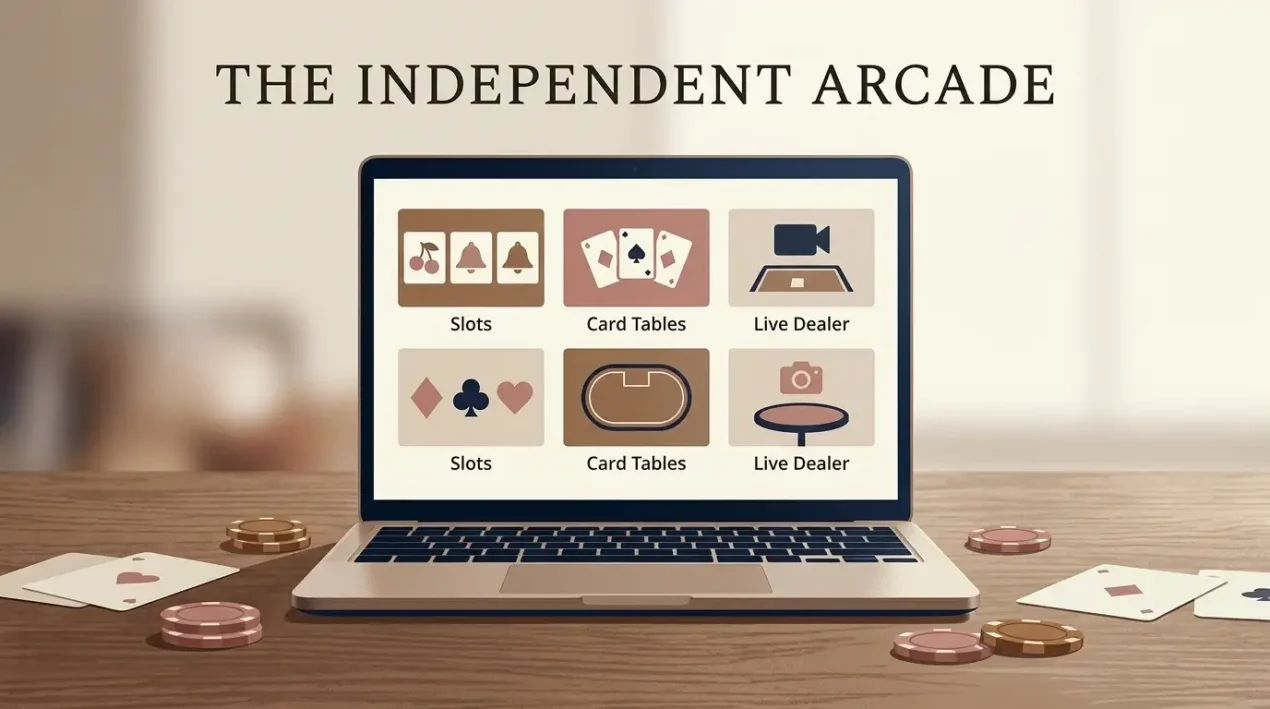
Contents
Winshark’s game catalogue spans slots, classic table formats, live dealer, crash, bingo, keno and dice-based games across 139 providers. The provider count is the useful starting point because it shows how many studios contribute to the catalogue, while the category mix explains what that breadth means in practice. A wide studio roster can reduce dependence on one design style or one game family, but it should not be confused with a count of individual titles.
Game categories cover more than slots
Winshark lists slots alongside roulette, blackjack, poker and other card games, baccarat and live-dealer tables. The catalogue also extends into crash, keno, bingo, dice and craps, with live-show formats included in the broader mix. That spread matters because different categories create different session structures: a slot session is built around repeated individual spins, while table and live formats are organised around rounds, hands or dealer-led sequences.
The practical effect is choice at the format level. A player looking for short automated rounds is not limited to the same part of the catalogue as someone who prefers table rules or a dealer-led environment. This makes the game menu broader in use, not just in branding. It also means bankroll planning should follow the game type rather than treating every title as interchangeable.
| Category | What defines the format | Practical consideration |
|---|---|---|
| Slots | Automated reel-based games with repeated spins | Session pace can be high because rounds resolve quickly. |
| Roulette, blackjack and baccarat | Rule-based table games | Bet sizing and round structure are easier to compare hand by hand. |
| Poker and card games | Card-based formats with game-specific rules | Decision structure varies materially between titles. |
| Live dealer and live shows | Streamed tables or presenter-led games | Rounds follow a scheduled dealer or host pace. |
| Crash, keno, bingo, dice and craps | Alternative casino formats outside standard slots and tables | Rules and session rhythm differ enough to merit separate review before play. |
A broad category list does not remove the need to read the rules of the individual game. Limits, mechanics and volatility can differ even inside one category. The strongest use of a large catalogue is therefore comparison: identify the format first, then compare titles within that format instead of moving between unfamiliar rule sets without adjusting stake size or session length.
A second useful distinction is between visual familiarity and rule familiarity. Two games can look similar while using different round structures, optional features or stake controls. Before changing titles, check whether the new game changes the pace of betting or introduces a different decision pattern. Keeping those changes visible makes it easier to compare sessions on the same budget rather than letting a new interface silently change the way money is used.
- Choose the game family before comparing individual titles.
- Read the paytable or table rules before committing a session budget.
- Keep stake size tied to the same AUD bankroll used for payments and cashout planning.
- Use time limits as well as money limits when fast round cycles make spending less visible.
Live casino adds dealer-led play to the catalogue
Live-dealer games are part of Winshark’s game offering. Their role is different from ordinary digital table games because the session is paced by a streamed dealer, physical or studio equipment and a sequence of announced betting windows. That creates a more structured rhythm than rapid automated play and can make each round feel more distinct.
Live casino is still casino gambling, so the presence of a dealer does not change the underlying need for limits. The useful difference is operational. A player can judge table rules, minimum and maximum stake controls shown in the interface, the speed of dealing and whether the format suits the planned session before committing to repeated rounds.
Provider diversity matters especially in live casino because studios can specialise in different presentation styles. Ezugi is one of the providers associated with Winshark, while Playtech and Pragmatic Play are also represented in the wider studio list. A multi-provider live section can therefore offer different interfaces and table formats even where the core game name is the same.
Live tables also make pacing easier to observe. A round has a visible beginning, betting window and result, which can support deliberate stopping points. That does not make the play safer by itself; it simply gives the player clearer moments to check elapsed time and remaining budget. A useful routine is to decide the number of rounds or the session end time before joining rather than using the presence of the next table opening as the decision trigger.
- Open the rules or information panel before joining a live table.
- Check the table’s stake range against the session budget.
- Observe a round before betting if the format or side bets are unfamiliar.
- Use account time controls or a fixed end point for longer dealer-led sessions.
For loyalty features tied to ongoing play, the separate Risks and limits and loyalty overview explains the points programme and cashback terms without treating them as a reason to extend a session.
The provider roster spans established casino studios
Winshark is listed with 139 providers. Examples consistently associated with the catalogue include Pragmatic Play, Play’n GO, BGaming, Yggdrasil, Nolimit City, Evoplay, Ezugi, Playtech, Push Gaming and Habanero. These names cover different parts of the casino market, including slots, table products and live-dealer content.
The consequence of a 139-provider roster is breadth at the studio level. It gives the catalogue multiple sources of game design, art direction, bonus mechanics and table presentation instead of relying on one supplier. That can be useful when a player wants to compare familiar formats across different developers, particularly after learning how one studio structures controls or information panels.
| Provider example | Role in the catalogue |
|---|---|
| Pragmatic Play | Part of the multi-provider casino mix, including casino and live content. |
| Play’n GO | Contributes to the slot-focused side of the catalogue. |
| BGaming | Another studio represented across the broader game selection. |
| Yggdrasil | Adds a separate supplier portfolio to the slot catalogue. |
| Nolimit City | Expands the number of distinct studio design styles available. |
| Evoplay | Contributes casino titles within the wider provider mix. |
| Ezugi | Associated with live-dealer casino content. |
| Playtech | Represents a large multi-product casino supplier. |
| Push Gaming and Habanero | Add further studio variety to the catalogue. |
The 139 figure should be read as a studio count, not as a promise about the number of games visible at a particular moment. A provider can contribute one title or many titles, and catalogue composition can vary by product area. The reliable takeaway is that the catalogue draws from a large number of suppliers and spans several casino categories.
This is also why provider count is more useful for understanding catalogue structure than for estimating session value. It tells you how many supplier families are represented, not whether one game is preferable to another. For comparison, stay within the same category and inspect the actual rules presented by the title. Provider breadth gives more options for that comparison; it does not replace it.
Provider breadth is most useful with a simple selection method
A large catalogue can create as much friction as choice if every title is treated as equally relevant. A practical way to narrow it is to move from broad to specific: choose the category, choose the provider or interface style, then compare the rules and stake controls of a small number of games. This turns a large menu into a manageable decision instead of an open-ended browsing loop.
For Winshark, the known provider breadth supports that approach. The list is wide enough to move between studios without leaving the same broad category, which is useful when comparing presentation or mechanics. The same logic works in reverse for live casino: choose the table game first, then compare the dealer-led versions offered by different studios.
The most useful catalogue habit is consistency. Keep the budget fixed in AUD, avoid increasing stakes simply because a new title looks different, and judge each game on its own rules. The main Winshark overview places this game breadth alongside payments, account controls and independent trust signals.
Common questions about Winshark games
How many providers are listed for Winshark?
Winshark is listed with 139 game providers.
Does Winshark have live casino games?
Yes. Live-dealer games are part of the catalogue.
Which game categories are available?
The listed categories include slots, roulette, blackjack, poker and other card games, baccarat, live dealer, crash, keno, bingo, dice and craps, plus live-show formats.
Which providers are associated with Winshark?
Examples include Pragmatic Play, Play’n GO, BGaming, Yggdrasil, Nolimit City, Evoplay, Ezugi, Playtech, Push Gaming and Habanero.
Does the provider count equal the total number of games?
No. A provider count measures the number of studios represented, not the number of individual game titles.
Winshark’s catalogue strength is variety across studios and formats
The clearest game-level characteristic is breadth: 139 providers feed a catalogue that covers slots, table games, live dealer and several alternative casino formats. That gives players room to compare studios without changing the basic type of game they want to play. The practical value comes from narrowing that choice deliberately—category first, provider second, rules and stake range third—while keeping the same bankroll and time limits across the session.
This material was created by the Winshark Notes team.
Related posts

Winshark risks, spending limits and account controls

Winshark payment methods and AUD banking