
Check the details before planning a visit
Coverage spans poker availability and dated events, plus accommodation, parking, dining, entertainment and other venue searches.
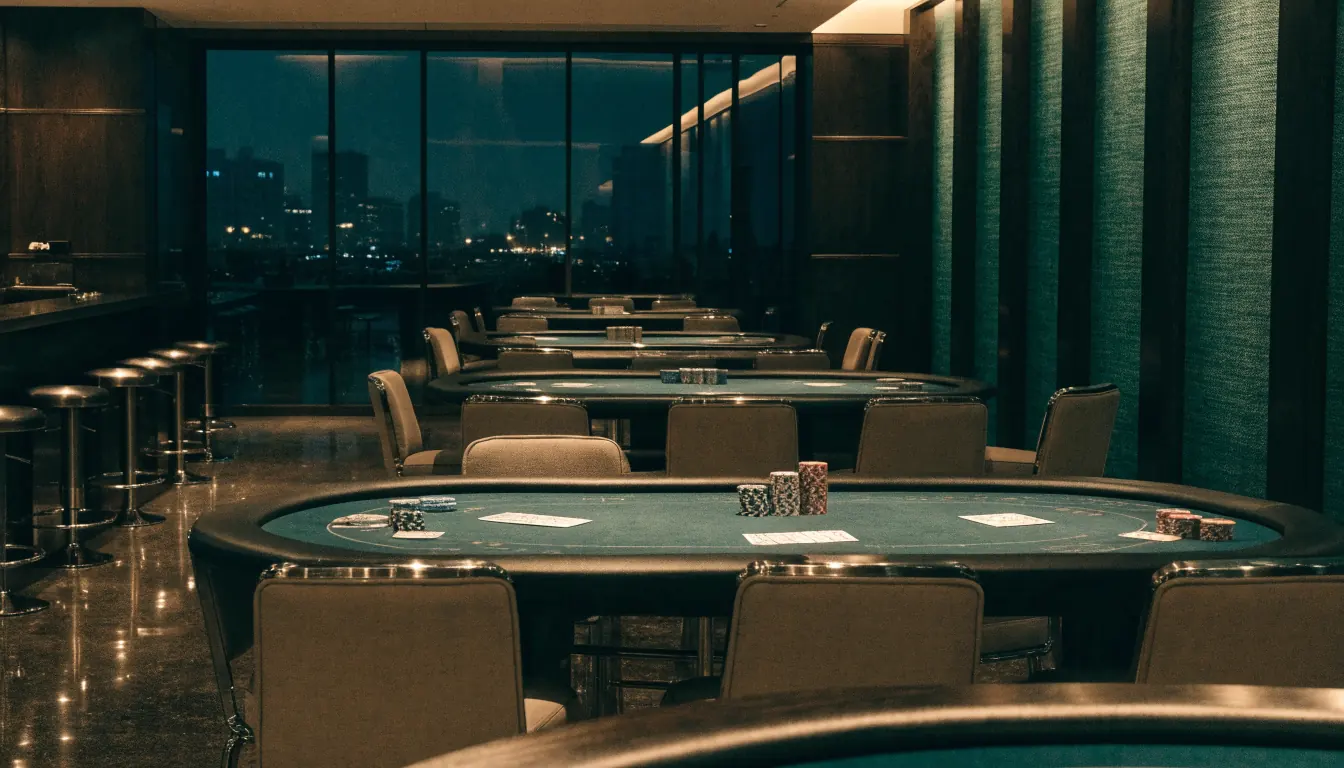
Poker Rooms and Tournament Information
A poker room and a poker tournament are different things. A room is a venue facility; a tournament is a scheduled competition with its own format, entry conditions and start time. Neither can be treated as a confirmed Hobart casino offering without current, venue-specific information. A search result, an old event listing or a photograph does not establish that a table is operating or that an event is still scheduled.
For anyone checking whether poker is available at a Hobart venue, the useful details are practical rather than promotional: whether live poker is currently offered, which formats are running, whether play is cash-based or tournament-based, and what conditions apply to entry. If a tournament is listed, its date, registration arrangements, start time, game format and cancellation policy matter. Without those particulars, “poker tournament” is only a label, not a usable schedule.
Tournament listings also need to be read as dated information. A past result or archived calendar can make a venue look active when no current event is announced. A listing that omits registration status or the event date is not enough to plan around. The same applies to claims about regular games: frequency should be stated explicitly by the venue, not inferred from a previous event or a general description of its entertainment.
Top Operators
Choosing a casino in Hobart means checking the practical details that matter before you play, including payment options and licensing information. This list provides a concise reference to the details available for each operator.
-
Ricky Casino
- Payout speed
- crypto under 1 hour, PayID 1-3 business days
- Min. deposit
- A$20 (A$30 to qualify for the bonus)
Ricky Casino lists crypto withdrawals in under an hour and PayID withdrawals in 1–3 business days. The minimum deposit is A$20, or A$30 to qualify for the bonus.
-
GoldenCrown
- License
- Curacao Gaming Control Board OGL/2023/176/0095 (Hollycorn N.V.)
GoldenCrown lists a Curacao Gaming Control Board licence, OGL/2023/176/0095, held by Hollycorn N.V.
-
LevelUp Casino
- License
- Curacao eGaming OGL/2023/174/0082 (Dama N.V.)
- Min. deposit
- A$15
LevelUp Casino lists a Curacao eGaming licence, OGL/2023/174/0082, held by Dama N.V. Its minimum deposit is A$15.
-
Lucky Dreams
- License
- Curacao
- Min. deposit
- A$20 (POLi)
Lucky Dreams lists a Curacao licence and a A$20 minimum deposit for POLi.
-
House of Pokies
- License
- international iGaming licence – jurisdiction not named in the source
- Payout speed
- PayID 1-24 hours
- Min. deposit
- A$30 (PayID from A$10)
House of Pokies lists an international iGaming licence, though the jurisdiction is not named. PayID withdrawals are listed at 1–24 hours, and the minimum deposit is A$30, or A$10 when depositing with PayID.
-
MrPacho
- Payout speed
- crypto 30-120 minutes, fiat 24-72 hours
- Min. deposit
- A$30
MrPacho lists crypto withdrawals in 30–120 minutes and fiat withdrawals in 24–72 hours. Its minimum deposit is A$30.
-
Uptown Pokies
- License
- Curacao (operating since 2017)
- Min. deposit
- A$20
Uptown Pokies lists a Curacao licence and states that it has been operating since 2017. The minimum deposit is A$20.
-
Rollero Casino
- License
- Curacao Gaming Control Board OGL/2023/176/0095 (Hollycorn N.V.)
Rollero Casino lists a Curacao Gaming Control Board licence, OGL/2023/176/0095, held by Hollycorn N.V.
-
Kingmaker
- Payout speed
- crypto ~90 minutes, fiat 1-5 days
- Min. deposit
- A$30
Kingmaker lists crypto withdrawals at approximately 90 minutes and fiat withdrawals in 1–5 days. Its minimum deposit is A$30.
-
DragonSlots Casino
- License
- Curacao Gaming Authority (Jumpman Gaming Ltd)
DragonSlots Casino lists a Curacao Gaming Authority licence held by Jumpman Gaming Ltd.
The phrase “casino rooms” can refer to sleeping accommodation, while “poker room” refers to a gaming facility. They are not interchangeable. Room availability, hotel terms and nearby accommodation are separate questions and do not establish that poker is offered. Similarly, a sports bar and a poker area are distinct facilities; one does not imply the presence of the other.
There is also a legal distinction between in-person poker and online casino games. Under Australia’s Interactive Gambling Act 2001, operators based in Australia cannot provide real-money online casino games, including poker, to people located in Australia. That restriction concerns online services; it does not confirm whether a particular Hobart venue runs live poker. Offshore websites are not regulated under Australian law, so an online poker listing should not be treated as a substitute for verified venue information or as an officially authorised local option.
Online access can be affected by location controls. Casinos and game providers may use an IP address to identify a player’s country and block access where their rules or licensing conditions require it. A game may therefore be absent from a lobby or fail to load from an Australian connection. Those technical signs concern online access, not the presence or absence of a physical poker room in Hobart.
A VPN can make an internet connection appear to come from another country, but using one to reach region-blocked pokies or casino games breaches the relevant site’s terms and may result in account suspension. It also does not change the legal status of the service in Australia. The appearance of access is not the same as local regulation or protection.
 Melbourne Casino: Legal and Venue Details to CheckSeparate in-person venue questions from online gambling rules, and see which details—rooms, parking, dining and facilities—still need verification.
 Sydney Casino Hotel: Rooms, Rates and Venue GuideCompare on-site and nearby accommodation, check rate conditions, and explore dining, facilities, table games and NSW gambling rules at Sydney’s casino.
Poker terminology in an online lobby can be misleading in another way: a game title or poker category does not prove that a live tournament is being held at a local venue. The online market and the physical venue market require separate checks. For online casino-style games, the Australian legal position is restrictive; for a Hobart event, the essential question is whether the venue itself has published current, specific details.
Opening status is another separate issue. A venue being open does not establish that poker is operating at that time, and a tournament announcement does not prove that registration remains open. These details can change independently. A current, dated notice is more useful than a general venue description, while an undated page should be treated cautiously.
The practical standard is straightforward: no room, game, tournament or timetable should be assumed from the word “casino” alone. A firm plan requires a current venue statement that identifies the poker activity and its conditions. Until those particulars are available, claims about a Hobart poker room or tournament remain unconfirmed rather than established.
Accommodation Near Hobart Casino
Accommodation searches around a casino are mainly a location-and-cost calculation. “Near” can refer to a short walk, a quick drive or simply a property in the same part of the city; those are not equivalent when transport time and expense matter. A booking label alone does not establish how close a property is to the venue.
Do
- Use a current map to measure the route
- Calculate the total cost including transport
- Verify the property address
Don't
- Rely on promotional labels like "nearby"
- Use straight-line distance as a journey measure
- Assume a lower nightly rate is the lowest cost
For Hobart, the useful comparison starts with the casino’s location, then measures each accommodation option against it using a current map and the route that would actually be taken. Straight-line distance can understate the journey if streets, access points or the route between the property and venue add time. Walking and driving routes may also differ. A practical comparison therefore uses the stated property address, the venue destination and the intended mode of travel—not a promotional description such as “nearby”.
The total cost is broader than the nightly rate. A lower room price can cease to be the lower-cost choice if reaching the casino requires extra transport or if the location does not suit the rest of the stay. Conversely, paying more for a closer address only makes financial sense when the value of reduced travel is greater than the price difference. The calculation depends on the full itinerary, not the word “casino” in a listing.
Comparing accommodation deals
A deal should be assessed by its final payable amount and its conditions. The headline rate may not represent the total for the selected dates, and cancellation terms can change the value of a booking. The relevant comparison is between options on the same dates, for the same number of guests and with comparable conditions. Otherwise, a lower displayed price may simply be a different product.
The same discipline applies to claims linking a stay to casino promotions. Accommodation and a casino promotion are separate terms unless the offer clearly states how they connect. A promotion headline does not establish that lodging is included, that a room is discounted or that a particular property is part of the offer. The booking conditions determine what is actually payable and what is actually supplied.
A simple comparison records the property address, route to the venue, quoted total, cancellation conditions and any transport cost that applies. That makes it possible to compare the full outlay rather than a nightly figure in isolation. If the route or final price cannot be established before booking, the apparent saving remains uncertain rather than confirmed.
Hobart casino accommodation searches can also mix two different needs: a place to stay within convenient reach of the venue, and a hotel operated by or attached to the casino. The first is a location decision; the second is a question about a specific hotel and its rooms. Keeping them separate prevents a nearby property from being mistaken for an on-site one, or a casino-related search result from being treated as proof of a particular arrangement.
For visitors whose plans include other parts of Hobart, proximity to the casino may not be the only relevant location measure. A property that reduces one journey could lengthen another. The best fit is therefore not automatically the closest listing: it is the option whose location and total cost match the trip as a whole. A clear route, comparable booking terms and a final price provide a more reliable basis for that decision than an unqualified “near the casino” label.
Hobart Casino Hotel and Room Details
A casino hotel can mean a hotel physically connected to a casino, a property operated by the same business, or simply a hotel marketed as being close to one. Those arrangements are not interchangeable. A room listing that mentions a casino does not, by itself, establish that the hotel is part of the venue or that a casino visit is included in the booking.
For a Hobart stay, the useful distinction is between a room at a casino-operated property and a room at an independent hotel nearby. The first depends on an actual hotel operation attached to or run by the casino; the second is a separate accommodation booking. The wording “casino hotel” is not enough to settle which arrangement applies. The property name, operator and address should be consistent across the room listing and booking terms before the stay is treated as an integrated hotel-and-casino package.
Room details also need to be read as conditions, not decoration. A room category may describe its bed configuration, occupancy, view or accessible features, but those details apply only when stated for that specific room. Photographs can show a representative room rather than the exact room assigned. Any included breakfast, late checkout, parking or other extra should be treated as part of the booking only if the confirmation records it.

The price comparison should use the amount payable for the selected dates and room, rather than a headline rate detached from the final booking screen. Check whether taxes and other charges are included, whether payment is taken at booking or at the property, and what happens if dates change or the reservation is cancelled. These terms determine the financial commitment; a low displayed rate does not describe it on its own. The applicable cancellation deadline and any refund condition matter more than a general label such as “flexible.”
A booking described as being near a casino should also be assessed on location separately from its name. “Near” does not specify walking distance, transport arrangements or whether the property is within the same complex. A map address and the accommodation’s own description provide a clearer basis for judging proximity than a search result title. The same check helps distinguish a hotel stay from a room package that merely promotes access to local attractions.
 Perth Casino: Venue, Online Access and Stay GuideExplore Perth casino stays, nearby accommodation, dining, parking, jobs and game details, plus online access limits under Australia's Interactive Gambling Act 2001.
 Queensland Casinos: Hotels, Rates and Verified DetailsLearn how casino-attached hotels differ from nearby stays, and why rates must match dates, occupancy and room type to be compared fairly.
Casino access should not be assumed to come with a hotel room. A room reservation is an accommodation agreement; it does not establish entry conditions, venue hours, entertainment schedules or eligibility for any casino promotion. Those are separate matters and may have their own terms. Likewise, a hotel stay does not alter the rules applying to gambling services in Australia. Under the Interactive Gambling Act 2001, operators may not provide real-money online casino games to people physically located in Australia; that restriction concerns online services, not the description of a physical hotel room.
For anyone comparing Hobart casino hotel rooms, the decision therefore rests on identifiable booking terms: the named property, its connection to the casino, the specified room category, the total payable and the cancellation conditions. If one of those elements is unclear, the booking should be assessed as accommodation with an unresolved detail, not as a confirmed casino-hotel package. A label is not a room plan, and it is certainly not a booking condition.
Parking, Venue Queries and the Limits of Online Casino Access
Parking questions are practical, but the answer depends on the venue’s current arrangements. Availability, fees, any complimentary-parking conditions and whether valet service is offered should be confirmed with the casino before setting out. A search result or an old listing is not a reliable basis for assuming that parking is free or that a valet service is operating. The useful comparison is the total cost and the conditions attached, not the label.
The same check applies to other on-site services. Bingo and dining are venue-specific offerings, and their existence, availability and terms should not be inferred from a general reference to a casino in Hobart. A plan that depends on a particular activity needs confirmation from the venue itself. That is separate from the question of whether online casino games can legally be offered to people in Australia.
On-site venue and online access are different questions
A physical casino visit and an online casino account sit under different rules. The Interactive Gambling Act 2001 prohibits Australian-based operators from providing real-money online casino games to people in Australia. The restriction covers games such as pokies, blackjack and roulette. An Australian venue’s existence does not make an online version of those games a lawful local service.
Offshore platforms are not regulated under Australian law. That distinction matters: an offshore site is not an Australian-regulated alternative simply because it can be reached from a device in Hobart. The fact that an operator is based overseas does not give it local regulatory status or the protections associated with an Australian regulator. Access and legal status should not be treated as synonyms.
For someone comparing an in-person visit with an online option, the sensible calculation is therefore not just travel cost against a deposit. The online alternative carries a different regulatory position, and any claims about local licensing or consumer protection need to be assessed accordingly. No Australian-run online casino can lawfully provide real-money casino games to people physically located in Australia.
 Darwin Casino: Entertainment, Stays and Visitor EssentialsExplore how Darwin’s casino fits the city’s entertainment scene, alongside practical coverage of stays, dining, events and visitor essentials.
 Best pokies in Brisbane: availability and venue checksLearn how to check gaming-area hours and why a venue’s general opening times do not confirm when its pokies are available.
Check the terms before travelling
For a venue visit, practical details should be settled before departure: whether parking is available, whether charges apply, and whether any valet arrangement is currently offered. If dining or bingo is part of the plan, those details also need direct confirmation rather than assumption. These checks establish what a visit would actually involve without treating a search listing as a current service guarantee.
For online access, the central distinction is simpler. Australian-run online casino games are prohibited under the Interactive Gambling Act 2001, while offshore platforms operate outside Australian regulation. Neither a Hobart location nor a venue-related search changes that legal position. A local casino visit and offshore online gambling are not interchangeable products, and the applicable conditions are not the same.
Contact Details, Bars and Entertainment
Contact details, bar information and entertainment listings are useful only when they refer to the same venue and are current for the intended visit. A phone number copied from an old directory entry may not reach the venue, while a map pin can identify a general area rather than an entrance. These are separate checks, not interchangeable evidence.
For a contact enquiry, the relevant details are the venue’s own published phone number or contact form and the department responsible for the question. A general reception contact may not handle event bookings, accessibility matters or gaming enquiries directly. Where a listing gives more than one channel, the purpose attached to each one matters: a number labelled for reservations should not be assumed to answer questions about a concert or gaming facilities.
A map listing also needs a practical reading. The venue name, mapped pin and route destination should align; otherwise navigation may end at a nearby street or property boundary. A car park shown on a map is not proof that parking is operated by the venue or available to its guests. Parking access, entry points and any restrictions are distinct details, best treated as separate from the venue’s contact information.
Bar searches raise a similar distinction between a place being listed and a service being available at a particular time. A bar’s name, operating hours, access conditions and any event-related arrangements can change independently. A listing that mentions a bar does not establish that it is open for a particular date, nor that it serves as a concert space. For a planned visit, the date-specific venue information is more useful than a general directory description.
Concert information should likewise be tied to an identifiable event and date. A venue page, ticket listing and third-party calendar may describe different stages of an event announcement. Before making plans around a performance, the essential details are the event title, date, venue, ticket status and any entry conditions stated by the organiser. A general entertainment page is not a substitute for confirmation that a specific concert is scheduled.
Baccarat and craps are game names, not confirmation that either is available at a particular Hobart venue. Availability can depend on the venue’s actual offering and operating arrangements. A game reference in an old listing, article or map description should not be treated as a current table schedule. The same distinction applies to claims about bars and entertainment: a category label does not establish a current service.
 Brisbane Casino Hotel Guide: Rooms and Visit DetailsCompare accommodation by total room cost, cancellation terms and stated inclusions; a room reservation alone does not establish casino access.
 Best pokies in Canberra: what listings can confirmLearn why a venue being open does not confirm that its pokies are operating, and what to verify about Canberra locations, RTP…
The practical standard is straightforward: use venue-issued information for contact and event details, and assess third-party listings as pointers rather than final confirmation. Dates, numbers, map pins and service descriptions can all become stale. Separating those details prevents a broad listing from being mistaken for a confirmed plan, which is a small administrative step with a better expected return than arriving on the strength of an obsolete entry.
Breakfast, Buffet Searches and Casino Jobs
Breakfast and buffet searches around a casino often combine several different questions: whether a meal is served, whether it is included with a stay, what it costs, and when it is available. These are separate terms, not one package. A buffet listing, if encountered, should be checked for the service date, meal period, price, booking conditions and any exclusions. “Breakfast included” can refer to a set menu or a limited allowance rather than unrestricted buffet access; the wording determines the value.
For anyone comparing a casino resort with another venue, the label alone does not establish what is included. A room rate, meal offer and casino rewards benefit may each have different eligibility rules. The useful comparison is the final payable amount for the intended visit, with any required booking or membership conditions included. An attractive headline rate is not a calculation.
A breakfast or buffet offer can also change by day or season. A listing without a current date, service period and clear price is not enough to establish that the meal will be available at the time required. Confirmation should come from the venue’s current published information or its direct booking channel. Menu descriptions and photographs are secondary to the terms attached to the actual service.
Comparing Job Roles
-
1
Identify the Vacancy
Determine if the listing is a live vacancy or an evergreen expression-of-interest page.
-
2
Review Employment Terms
Compare the written pay, conditions, and roster against the described duties.
-
3
Assess the Role
Verify whether the position is customer-facing, operational, or administrative.
Rewards and employment terms
Casino rewards are another distinct search. A rewards programme may attach benefits to membership, eligible spending or a particular venue, but its name does not establish the value of those benefits. The relevant terms are how points or status are earned, what they can be exchanged for, when they expire and whether exclusions apply. A meal benefit should be assessed by its conditions and cash equivalent, not by the word “complimentary.” Without a stated value and usable terms, it cannot be counted as a saving.
Employment searches require a different calculation. A job listing should identify the employer, position, location, employment type and the way pay and conditions are set. The roster and required availability matter alongside the headline wage: hours offered, weekend or evening work, training, and any eligibility requirements determine what the role actually means. A general careers page is not evidence that a specific vacancy is open.
For a casino job in Hobart, the distinction between a live vacancy and an evergreen expression-of-interest page is material. The application should be tied to a named role and current recruitment process. Applicants can compare the written employment terms with the duties described, including whether the position is customer-facing, operational or administrative. No title alone settles the workload or schedule.
The same caution applies to resort-related searches: “resort” is a description, not a complete statement of services or inclusions. Meal access, rewards benefits and employment opportunities are separate matters, each requiring its own current terms. For practical budgeting, only a published price or confirmed employment condition belongs in the calculation; assumptions do not reduce the bill or secure a position.

Opening Hours, Events and Development
Opening status, scheduled entertainment and redevelopment are separate questions, and a result for one does not settle the others. A venue may be operating without a particular event taking place; an announced project does not establish that work has begun or that public access has changed. For a useful Hobart casino review, each claim needs a date and a direct venue notice rather than a recycled listing.
Opening hours are operational information, not a permanent feature. Search results and directory entries can remain visible after a schedule changes, so they should not be treated as confirmation that the venue is open on a particular day. A reopening claim needs the same care: it should identify an official announcement and its effective date. Without those details, “open” or “reopened” is not a dependable status.
Event listings also need to distinguish confirmed programming from general entertainment descriptions. A dated event notice can establish what is scheduled; it does not prove that other performances or activities are available. Cancellations and changes can make older listings misleading, so the date of the notice matters as much as its headline.
Development reports require a similar separation between proposal, approval, construction and completion. Those are different stages, with different implications for access and operations. A reference to planned work is not evidence of a completed project, and a concept announcement is not a construction timetable. No local development detail should be treated as settled without a current, attributable announcement.
Menu searches sometimes appear alongside event and opening-hour searches, but a menu is not an operational status update. Food service, venue access and programmed entertainment are distinct matters; one cannot be inferred from another. The details belong to separate checks, rather than being bundled into a single claim about what is currently available.
The online-casino question is legally different from whether a physical venue is open. Under the Interactive Gambling Act 2001, operators cannot provide real-money online casino games, including slots, poker and table games, to people in Australia. Offshore platforms are not regulated under Australian law, and a foreign licence does not make an online casino a lawful Australian provider. A VPN may make an IP address appear to be from another country, but using one to reach region-blocked games can breach a platform’s terms and result in account suspension. That workaround does not change the legal status of the service.
A defensible assessment therefore keeps four records apart: current operating status, dated event notices, development-stage announcements and the legal distinction between an in-person venue and online casino play. If a claim has no date or attributable notice, it should not be counted as confirmed.
Address, Dress Code and Spa Searches
A useful address needs to identify the venue, not just the city or a map pin. Before arranging a visit, compare the venue name and street address across its official website and current map listing. Check that the directions lead to the intended entrance; a nearby business or a general destination marker is not a substitute for a confirmed venue address.

The same care applies to dress-code details. A search result or old photograph cannot establish what is permitted at a venue now. Any stated policy should come from the venue’s own current information, and it may distinguish between different areas or occasions. Where no policy is published, clothing requirements should not be inferred from the word “casino” or from rules used by another property.
Spa searches require a separate check. The terms “day spa” and “casino spa” can point to different businesses, and a spa appearing near a casino on a map is not necessarily part of it. Before treating a treatment or facility as available at the casino, confirm the business name, location, services and booking arrangements directly with the provider. A map result establishes proximity at most; it does not establish ownership or access for casino guests.
These details are practical, but they do not establish what games a venue offers. Venue information and online gambling are separate matters. Under the Interactive Gambling Act 2001, operators based in Australia cannot provide real-money online casino games, including pokies, poker and table games, to people in Australia. A web page describing a casino or displaying game titles does not change that restriction. Offshore sites are not regulated under Australian law, and their availability should not be mistaken for local authorisation.
For a visit, the useful record is straightforward: the confirmed venue name, its address, the applicable dress policy and, if relevant, a spa provider’s own service and booking details. Each item should be attached to the business responsible for it. That keeps a nearby spa from being mistaken for a casino facility, and an outdated listing from becoming a costly detour.
- Verify the venue name and street address
- Check the current official dress code policy
- Confirm the business name and booking for any spa services
- Cross-reference the address on the official website and map
Restaurant Searches Around Hobart Casino
A restaurant described as being at a casino is not necessarily inside the gaming venue. It may be a separate business nearby, or a listing may combine several locations under one page. For Hobart, the distinction matters: “at the casino” implies an on-site dining option, while “near the casino” can refer to an independent restaurant elsewhere in the surrounding area.
Restaurant names, menus and service arrangements should be checked against current information from the business itself before making plans. A directory entry can establish that a name is being listed, but does not by itself confirm that the restaurant is operating, that its menu is current or that it belongs to the casino. The useful details are specific: the restaurant’s own location, the date of its latest menu or update, and whether the listing identifies the casino as the operator or simply as a nearby landmark.

The same distinction applies to searches for restaurants in a Hobart casino. A page grouped under a casino heading may cover dining options across a wider precinct rather than a restaurant within the venue. Location wording, business ownership and booking details should agree; if they do not, the relationship is unclear. A polished listing is packaging, not proof of an on-site restaurant.
A rooftop-bar search is a separate venue claim, not evidence of a restaurant or dining service. A rooftop venue may focus on drinks, food, or both, but the category name alone does not settle that question. Menus and service details need to be confirmed from the venue’s own current information rather than inferred from the word “bar” or from a casino association.
For anyone comparing Hobart casino restaurants, the decision can be reduced to three checks: whether the business is open under that name, whether its address places it inside the casino or merely nearby, and whether the current menu supports the intended meal. If any of those points cannot be established, the listing is not a dependable basis for a booking or itinerary. A restaurant search result may be useful as a lead; it is not a confirmed dining arrangement.

The phrase “Hobart casino” can also describe the destination rather than the business providing the meal. That makes the operator’s own venue information more useful than a broad directory category. Until the location and restaurant details line up, no particular dining option should be assumed to be part of the casino.
Food Options and Pool Searches
Food and pool facilities are separate parts of a venue check, even when both are associated with a casino visit. A general food listing may refer to an on-site outlet, a food court, or places elsewhere in the surrounding area. Those categories do not establish the same level of access: an on-site option may have its own service hours, while nearby food requires a separate trip.
A food-court reference also needs to be read literally. It does not, by itself, confirm which counters operate, what they serve, or whether the space is open when the casino is open. Menus, service times and access arrangements can change, so current venue information is more useful than an old directory entry. Restaurant names and menus belong to a separate check; the practical distinction here is between general food service and a shared food-court space.

A pool listing needs the same care. The word may describe a facility at a property, a nearby pool, or a result associated with the broader Hobart area. Proximity in a listing does not establish that a pool is part of the casino or available to casino visitors. Access conditions, operating periods and any connection to accommodation should be checked as distinct details rather than inferred from the venue name.
For planning, the useful comparison is straightforward: identify whether food is on-site or nearby, whether the reference is to a food court or another kind of service, and whether a pool is part of the property or simply in the area. Each is a separate amenity claim. Treating one as proof of another turns a directory label into an itinerary, which is a poor accounting method.
Are online casino-style games restricted in Australia?
Yes. The Interactive Gambling Act restricts Australian-based operators from offering online casino games such as pokies, blackjack and roulette to people in Australia. Offshore platforms are not regulated under Australian law.
What is the legal age to play pokies in NSW?
You must be 18 or older to play poker machines in NSW.
What is pokies region blocking?
Region blocking uses a player’s IP address to identify their location and restrict access from excluded countries. Blocked games may not appear in the lobby or may fail to load.