
Know what a casino stay and its offers actually mean
A practical look at accommodation comparisons and the limits of what can be confirmed about casino services, facilities and nearby options.

Canberra Casino Hotel Rooms and Deals
A hotel room described as part of a casino is not the same product as a room in a separate Canberra hotel near a casino. The distinction matters before comparing rates: the first description implies a connection between the accommodation and a gaming venue, while the second describes location only. A name or booking label alone does not establish which arrangement applies.
For a casino-branded stay, the useful comparison is between the room rate and the terms attached to it. The total can depend on the selected dates, room category, occupancy, cancellation conditions and any required payment at booking. A displayed nightly price is not necessarily the amount ultimately charged. Taxes, service charges or other compulsory costs, where applicable, belong in the final comparison rather than in the small print after a choice has been made.
A deal should be measured against the same room on the same dates without the offer. A discount has value only if the final payable amount is lower, or if an included benefit has a clear value and can actually be used. A package can sound generous while adding little if its inclusions are unwanted or subject to conditions. The relevant figures are the total cost, what is included, when payment is due and what happens if plans change.
Room descriptions also need to be read as terms, not decoration. A room category may specify a view, bed configuration or other feature, but a broad label does not confirm that every room has it. The exact category and its stated inclusions are the basis for comparison. Where a booking is non-refundable, the lower price is an exchange: less flexibility for a smaller charge. That is a financial choice, not a saving in every circumstance.
 Pokies by Region: Australian Casino TopicsSee search topics grouped around Australian cities and states, with related themes including online casinos, live dealers, keno, payouts, and real-money pokies.
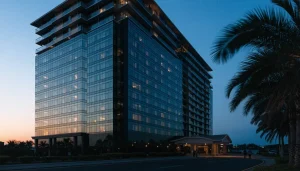 Queensland Casinos: Hotels, Rates and Verified DetailsLearn how casino-attached hotels differ from nearby stays, and why rates must match dates, occupancy and room type to be compared fairly.
The phrase “casino hotel in Canberra” can refer to several different arrangements: accommodation operated by a casino, a hotel attached to a casino, or an independent property marketed as being close to one. Those arrangements should not be treated as interchangeable. A property’s relationship to a venue, if any, should be stated in its own description. Proximity claims also need a practical measure, such as a mapped route, rather than an impression created by a shared name or promotional wording.
Opening hours are a separate issue from room availability. A hotel may accept bookings even when a gaming venue has different operating hours, and a room reservation does not establish that every casino service is open at the time of arrival. Hours can also be listed separately for different parts of a venue. Any plan that depends on a particular service being available therefore turns on the venue’s current schedule, not on the hotel’s booking calendar.

The same separation applies to check-in and check-out. These are accommodation conditions; casino opening times are venue conditions. Neither can be inferred from the other. Booking pages should state the room’s arrival and departure terms, while current venue information should state when its operations are available. A bundled offer does not merge those schedules into one promise.
For a room comparison, the decision record can be kept short: property identity, room category, dates, total payable, included benefits, payment timing, cancellation terms and the stated relationship to the casino. If any item changes between offers, the prices are no longer directly comparable. That is particularly important when a deal is advertised as limited or discounted: the label does not replace the arithmetic.
A Canberra hotel stay and a casino visit may be linked in a booking, or they may be separate transactions. The room’s final cost and conditions determine the accommodation value; the venue’s own operating information determines whether a visit fits the schedule. Keeping those two calculations apart prevents a hotel name, package label or assumed opening time from doing more work than it can support.
 Darwin Casino: Entertainment, Stays and Visitor EssentialsExplore how Darwin’s casino fits the city’s entertainment scene, alongside practical coverage of stays, dining, events and visitor essentials.
 Best Pokies in Adelaide: Hours, Access and ChecksLearn how to verify Adelaide venue hours, distinguish an “open now” listing from pokies availability, and check location, reporting and payment details.
Poker Rooms and Tournaments: What the Available Facts Establish
A poker room, a poker tournament and pokies are different things. A venue’s Electronic Gaming Machines (EGMs) do not establish that it has poker tables, hosts organised tournaments or offers a dedicated poker room. The distinction matters when assessing what “poker at a Canberra casino” means: the phrase could refer to table play or an event, not machine gaming.
The NSW club figures concern pokies, not poker tables. Club Liverpool has the largest number of operational poker machines among clubs in that state. That is a comparison of club gaming machines in NSW; it says nothing about the poker-room facilities or tournament schedule of a Canberra venue. Treating it as evidence of either would mix separate products and locations.
The rules cited for NSW machine play are also specific to that state. Gambling on poker machines there is restricted to people aged 18 and over. NSW also requires pre-commitment, under which players set a loss limit before they begin playing. These are controls for poker-machine gambling in NSW, not confirmation of Canberra poker tables or a local tournament’s entry conditions.

Tournament details, where an event is offered, are a separate set of terms from machine play. A schedule, format, buy-in, starting stack, prize structure and registration rules would need to be stated for the particular event. None can be derived from the number of EGMs at a club or from state rules about poker machines. The word “poker” alone does not settle whether a listing concerns a table game, an organised competition or a pokie.
The same separation applies to searches for casino rooms. A room might mean a poker room, a hotel room or a gaming area; those are not interchangeable. A sports bar, opening status and poker access are further distinct details. Knowing that someone wants a Canberra casino sports bar, or wants to know whether a venue is open today, does not establish that a poker room or tournament is available there. Each facility and operating detail requires its own confirmation.
 Perth Casino: Venue, Online Access and Stay GuideExplore Perth casino stays, nearby accommodation, dining, parking, jobs and game details, plus online access limits under Australia's Interactive Gambling Act 2001.
 Best pokies in Brisbane: availability and venue checksLearn how to check gaming-area hours and why a venue’s general opening times do not confirm when its pokies are available.
For practical comparisons, the useful unit is the named venue and the specific activity. A poker-room listing should identify table availability and any conditions of entry. A tournament notice should give its event terms and timing. A machine-gaming reference should be labelled as such rather than presented as poker-table information. Without those distinctions, a count of machines can look like a measure of poker provision when it is not.
There is one dry accounting point in the NSW comparison: the highest machine count measures machine capacity, not the range of games, the quality of a poker room or the likelihood of a tournament. It cannot be converted into a claim about Canberra.
Accordingly, NSW club data can explain the difference between machine gaming and poker facilities, and NSW rules can describe controls attached to machine play in that state. Neither provides a basis for attributing poker tables, tournaments, sports-bar access or current opening status to a Canberra casino. Those are venue-specific particulars, not consequences of the NSW figures.
Casino Features and the Limits of What Can Be Verified
A request for baccarat, craps, a bar, parking or concerts in Canberra does not establish that a particular casino offers any of them. Those are separate operational details, and each requires confirmation from an identifiable venue. Without that link, a list of features would turn search interest into a factual claim.
The distinction matters most for table games. Baccarat and craps are recognised casino games, but their general availability elsewhere says nothing about whether either is offered at a Canberra venue, what the table arrangements are, or when play might be available. The same applies to gaming floors more broadly: a game’s existence in the market is not evidence of a local installation.
Bars and car parking require their own checks. A bar may be part of a casino, a separate business in the same complex, or absent altogether. Parking can be on-site, nearby, paid, restricted, or unavailable to visitors; a map pin alone would not establish the terms. Without a confirmed venue and current operating information, none of those arrangements can be responsibly described as a Canberra casino feature.
Concert searches also need a direct connection to an organiser or venue calendar. An event listing may refer to a different location, a past date, or a nearby entertainment space rather than a casino. A concert venue and a casino are not interchangeable just because they appear under a shared destination label. Dates, ticketing and access conditions should be checked against the event’s current listing before plans are based on them.
Contact details and maps are similarly easy to misattribute. A phone number should be tied to the business it serves, and a map should identify the actual venue rather than an approximate area or unrelated result. A contact page, if available, should make clear whether it handles gaming, hospitality, events or general enquiries. Repeating a number without that context would make it look more authoritative than it is.
A practical verification sequence is straightforward: first identify the legal business or venue name; then use its own current information to confirm the specific feature; finally check any relevant conditions, such as event dates, parking terms or table-game availability. Third-party listings can help locate a lead, but they are not a substitute for confirmation when details may change.

For a Canberra casino, the useful distinction is therefore between a requested feature and a confirmed one. Baccarat, craps, a bar, car park, concerts, a contact number and a map are all precise subjects, but none can be inferred from the wording of a request. Until a feature is tied to a named venue through dependable current information, it should remain an open question rather than a recommendation or promise.
Online Casino Access in Australia: Legal and Location Restrictions
A search for online casino access in Canberra does not change the legal position. Under the Interactive Gambling Act 2001, operators must not provide real-money online casino games—including pokies, poker, blackjack and roulette—to people physically located in Australia. The restriction concerns where the player is located, not whether a service is described as a Canberra casino or hosted overseas.
A foreign gambling licence does not make an online casino a lawful provider in Australia. Offshore platforms are not regulated under Australian law, and access may be blocked. The legal framework places the prohibition on operators; it does not impose a fine or criminal prosecution on an individual merely for playing at an offshore casino. That distinction is not an endorsement: offshore customers have limited dispute-resolution options, and winnings may not be protected if an operator becomes insolvent.
For a gambling service to operate lawfully in Australia, it must hold the relevant Australian licence, including an ILGA licence where applicable. That does not authorise online casino games that the Interactive Gambling Act prohibits operators from supplying to people in Australia. The maximum daily penalty under the Act is $360,000 for an individual and $1.8 million for a body corporate. The exposure is attached to providing prohibited services, not to a player’s choice of search terms.
Why games can disappear or fail to load
Online platforms can use a player’s IP address to estimate geographic location. If that location is in a restricted country, an operator or software provider may block access. In practice, a restricted game may not appear in the lobby at all. A game that is visible through another route can also fail to load; a specialist review has reported this outcome as a possible effect of region blocking. A loading error alone does not establish the cause, but location restrictions are one explanation.
Changing an IP address with a VPN can make a connection appear to come from somewhere else. That does not change the player’s physical location or the Australian rules. Using a VPN to access region-blocked pokies sites breaches the site’s terms of service and may result in account suspension. It can also complicate access to account records or funds; it is not a reliable workaround.
This is why “available online” and “available to a person in Canberra” are not equivalent. A game catalogue can vary by country, provider and licensing conditions. An Australian IP address may produce a different lobby from one shown elsewhere, while a particular title may be unavailable or refuse to start. Neither a game listing nor a promotional page establishes that the service may lawfully accept Australian customers.
Sports betting is treated differently from online casino games and remains widely accessible in Australia. That distinction does not extend to online pokies, bingo-style casino products or table games when offered as prohibited interactive gambling services. Likewise, a physical casino search involving dining or parking concerns a different subject from online access: no claim about a Canberra venue’s facilities follows from the rules governing internet gambling.

The practical conclusion is narrow: online casino games offered to people in Australia are prohibited services, and location technology can restrict what appears or loads. A foreign licence, VPN connection or Canberra-related label does not remove those restrictions.
Accommodation Near the Casino
Accommodation described as being near a Canberra casino cannot be compared reliably until the casino’s location is established. “Near” is a distance claim, not a feature of a hotel listing: without a confirmed destination address, travel times, walking routes and parking arrangements cannot be assessed against it. A property’s use of casino-related wording does not, by itself, establish that a casino operates at the stated destination.
That distinction matters when comparing Canberra accommodation deals. A rate may look relevant because it mentions casino access, but the wording alone does not confirm where the property is, what venue it refers to, or whether access is available. Treating an unconfirmed association as a booking benefit would add value to the offer without adding evidence. The price can be real while the implied convenience remains unproven.
A useful comparison separates the accommodation itself from the claimed connection. The property name, full address, dates covered by the rate, cancellation conditions and total payable amount are the basic terms to assess. Any casino-related inclusion needs its own clear description. If the offer does not identify the venue and explain what the connection provides, it should not be costed as a confirmed benefit. A discount label or promotional headline is not a substitute for those terms.
Do
- Verify the property's full address
- Check total payable amount and dates
- Review explicit cancellation conditions
Don't
- Assume "near the casino" is a benefit
- Rely on promotional proximity labels
- Cost unconfirmed associations as value
The same discipline applies to parking near a casino. Parking convenience depends on the destination, the property’s own arrangements and the route between them. Without a confirmed location, no claim about walking distance, transfer time, availability or cost can be made responsibly. A booking should not be chosen on the assumption that parking is nearby, included or suitable for a particular visit unless those details are stated for the actual property and dates.
Opening times can affect the practical value of accommodation, but they do not resolve the location question. A reference to gaming machines, poker machines or trading hours does not identify a venue or establish how far a hotel is from it. Those details need to refer to a specific operating venue before they can inform a stay. Otherwise, they are separate claims attached to a broad location label.
For a sound comparison, calculate the amount due for the stay on the required dates, then assess only the inclusions that are explicit. Keep accommodation costs separate from transport and any unconfirmed entertainment benefit. If cancellation terms could leave a charge after plans change, include that exposure in the comparison rather than focusing only on the displayed rate.
The practical result is straightforward: Canberra accommodation can be compared on its stated address, dates, total price and conditions. A recommendation based on proximity to a casino requires a confirmed casino location as well. Until both ends of that distance are identified, “near the casino” remains a description, not a measurable advantage.
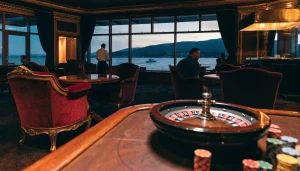
Breakfast, Buffet and Casino Employment Searches
Breakfast, buffet, resort, rewards and employment information are separate questions, even when they appear together in searches about a Canberra casino. A phrase combining a city and a venue type does not establish that a particular business operates there, serves breakfast, runs a buffet, offers a rewards program or is recruiting. Each claim needs confirmation from the organisation responsible for it.
Breakfast, buffet and resort claims
A breakfast listing should identify the venue providing the meal and make clear whether it is open to the public, limited to guests, or subject to particular service conditions. A buffet listing needs the same checks: the name of the dining venue, whether buffet service is actually offered, and the applicable days and booking arrangements. Without those details, “casino breakfast” or “casino buffet” describes an expectation, not a confirmed service.
The word *resort* also carries practical implications. It can suggest a bundled property with accommodation and hospitality facilities, but the label alone confirms none of those components. Before relying on it, the relevant operator should identify the property and specify what is included. A general casino reference does not establish that a resort exists in Canberra or that breakfast or buffet dining forms part of one.
These distinctions matter when comparing costs. A meal described as included may have conditions attached, while a buffet or breakfast advertised separately may have its own price and availability rules. If the terms cannot be checked, the value of the offer cannot be calculated. An attractive label is not a price.
Breakfast and Buffet
Requires confirmation of the dining venue, service hours, and whether it is open to the public.
Resort Facilities
Label alone does not confirm bundled accommodation or hospitality; requires operator specification.
Rewards Programs
Value depends on specific eligibility, earning rules, and exchange terms from the operator.
Rewards and employment
A casino rewards program is another independent claim. The name of a program, its eligibility rules, how points are earned, what they can be exchanged for and any expiry conditions would determine its practical value. None should be assumed from the word *rewards* in a venue description. Without clear terms from the operator, there is no reliable basis for estimating a benefit.
Employment searches require a different kind of confirmation. A genuine vacancy should identify the employer, position, duties, location, application method and closing date. Hospitality roles can sound similar while having different responsibilities and conditions; a broad reference to casino jobs does not establish that a role is available or that a particular employer is hiring. Current listings should be checked through the named employer’s own recruitment channel, with the position and application details matching across the listing and employer information.
The same standard applies to claims about work at a casino resort. A phrase can combine a property type with a job category without confirming either a local resort or an open position. Until an employer and vacancy are identifiable, there is no job offer to assess and no employment condition to compare.
For these searches, the useful distinction is between a category of interest and an operating service. Breakfast, buffet dining, resort facilities, rewards and vacancies each require their own evidence and terms. Treating them as a single package would turn several unconfirmed assumptions into one misleading conclusion.
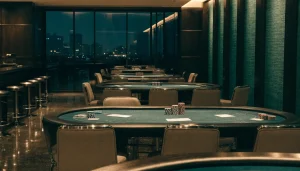
Opening, Development and Events: Details Not Yet Verified
A search for a Canberra casino opening date, reopening announcement or development project does not establish that a venue is operating or that a project has been approved. Those are separate claims, each requiring evidence of its own. A planned proposal is not an open casino; an announcement of intended work is not proof that construction has started; and a reopening date is meaningful only when tied to an identifiable venue and a confirmed schedule.
The same distinction applies to entertainment and events. A listing, promotional post or copied calendar entry needs to identify the organiser, venue and event date before it can support a claim that a casino event is taking place in Canberra. Without those particulars, there is no sound basis for describing a programme, naming performers or presenting an event as forthcoming. A review also needs an identifiable venue and a clear account of what was reviewed. A rating or summary without that context cannot establish current operating status.
Development claims are best assessed through dated, attributable announcements and relevant planning or construction records. The wording matters: “proposed,” “approved,” “under construction” and “open” describe different stages, not interchangeable updates. A project page that has not been updated may remain online after circumstances change, while a social post can circulate without confirming a decision. Dates, the responsible organisation and the precise status should all align before a development is described as current.
Employment information is another possible signal, but it is not proof of an opening. A vacancy may be speculative, outdated or attached to a different business. Before treating a role as evidence of casino recruitment, the listing needs to identify the employer, work location, position and publication status. Even a genuine vacancy establishes only that recruitment is being sought for that role; it does not establish a launch date or confirm the operation of a casino.
Verifying Development
-
1
Identify Source
Find dated, attributable announcements or official planning and construction records.
-
2
Analyze Status
Distinguish if the project is "proposed," "approved," "under construction," or "open."
-
3
Cross-Reference
Align the dates and status with the responsible organization's current information.
The practical distinction is between evidence of an activity and evidence of a venue. An event notice can exist without proving a casino is open, just as a job advertisement can exist without proving a development has been completed. For any Canberra-specific update, the decisive details are who issued it, when it was issued and what status it actually confirms. If those elements cannot be established, an opening, reopening, event schedule or development timeline should not be stated as fact.
A menu reference has the same limitation: it cannot, by itself, establish that a casino is open or that a particular service is operating. Menu details belong to a separate venue check, not to a conclusion about development or events. Until a dated, attributable announcement confirms the relevant status, claims about a Canberra casino opening, reopening, development programme or event calendar remain unsubstantiated.
Address, Bars, Dress Code and Spa Searches
A Canberra casino address should be treated as a fact to confirm, not inferred from a venue name or a map result. Similar names can refer to different businesses, and a listing may remain visible after details change. Before arranging travel, the relevant checks are the venue’s full street address, its current operating status and whether the listing comes from the venue itself. Without those details, travel time, transport options and proximity to other facilities cannot be assessed reliably.
The same standard applies to bars. A reference to a bar does not establish that one operates at a particular venue, what it serves or when it is open. Those details affect whether a visit fits a planned schedule, so an old directory entry or an unattributed description is not a substitute for current venue information. Bar availability should not be assumed from the word “casino” alone.

Dress requirements are also venue-specific. A general expectation about casino attire cannot establish a Canberra venue’s entry policy, and assumptions about formal clothing or casual wear can lead to an avoidable refusal at the door. Any stated rule needs to come from the venue and should be checked for the relevant date or event. If no current policy is published, the practical position remains uncertain rather than implicitly permissive.
Spa and day-spa references require the same distinction between a facility being mentioned and being available. A spa’s existence, services, booking arrangements and access conditions are separate details; none follows automatically from a casino or hotel label. A package or directory description should not be treated as confirmation that treatments can be booked or that the facility is open to visitors.
Careers information is a separate practical matter from venue access. A job title or vacancy copied into a third-party listing does not establish that recruitment is active. Current vacancies and application instructions should be tied to an identifiable employer and its own recruitment channel. That avoids confusing old listings, unrelated hospitality jobs and casino employment.
Games are another detail that should be confirmed directly rather than inferred from a location listing. A venue’s name does not establish which games are available on site. These checks are deliberately plain: an address, entry rule, bar, spa, vacancy or game offering is useful only when attached to the right venue and current information.
Casino Restaurants in Canberra
Top Operators
Choosing a casino for Canberra play in 2026 means weighing practical details such as payment options and licensing information. Use this list as a concise reference when deciding what to check before you play.
-
Ricky Casino
- Payout speed
- crypto under 1 hour, PayID 1-3 business days
- Min. deposit
- A$20 (A$30 to qualify for the bonus)
Ricky Casino lists crypto withdrawals in under an hour and PayID withdrawals in 1–3 business days. Its minimum deposit is A$20, or A$30 to qualify for the bonus.
-
GoldenCrown
- License
- Curacao Gaming Control Board OGL/2023/176/0095 (Hollycorn N.V.)
GoldenCrown lists a Curacao Gaming Control Board licence, OGL/2023/176/0095, held by Hollycorn N.V.
-
LevelUp Casino
- License
- Curacao eGaming OGL/2023/174/0082 (Dama N.V.)
- Min. deposit
- A$15
LevelUp Casino lists a Curacao eGaming licence, OGL/2023/174/0082, held by Dama N.V., and a minimum deposit of A$15.
-
Lucky Dreams
- License
- Curacao
- Min. deposit
- A$20 (POLi)
Lucky Dreams lists a Curacao licence and a A$20 minimum deposit when using POLi.
-
House of Pokies
- License
- international iGaming licence – jurisdiction not named in the source
- Payout speed
- PayID 1-24 hours
- Min. deposit
- A$30 (PayID from A$10)
House of Pokies lists an international iGaming licence, though the source does not name its jurisdiction. PayID withdrawals are listed at 1–24 hours, and the minimum deposit is A$30, or A$10 when depositing with PayID.
-
MrPacho
- Payout speed
- crypto 30-120 minutes, fiat 24-72 hours
- Min. deposit
- A$30
MrPacho lists crypto withdrawals in 30–120 minutes and fiat withdrawals in 24–72 hours. Its minimum deposit is A$30.
-
Uptown Pokies
- License
- Curacao (operating since 2017)
- Min. deposit
- A$20
Uptown Pokies lists a Curacao licence and says it has been operating since 2017. Its minimum deposit is A$20.
-
Rollero Casino
- License
- Curacao Gaming Control Board OGL/2023/176/0095 (Hollycorn N.V.)
Rollero Casino lists a Curacao Gaming Control Board licence, OGL/2023/176/0095, held by Hollycorn N.V.
-
Kingmaker
- Payout speed
- crypto ~90 minutes, fiat 1-5 days
- Min. deposit
- A$30
Kingmaker lists crypto withdrawals at about 90 minutes and fiat withdrawals in 1–5 days. Its minimum deposit is A$30.
-
DragonSlots Casino
- License
- Curacao Gaming Authority (Jumpman Gaming Ltd)
DragonSlots Casino lists a Curacao Gaming Authority licence held by Jumpman Gaming Ltd.
A restaurant described as being at a casino should have a clear, current connection to a named venue. The distinction matters: a restaurant elsewhere in Canberra does not become a casino restaurant simply because it is nearby, and a dining listing does not establish that a casino operates at that address. Before treating a listing as a destination, the venue name, location and restaurant’s own booking or information page should match.
For anyone comparing casino restaurants in Canberra, the useful details are operational rather than promotional: whether the restaurant is open on the intended day, whether it accepts bookings, what type of food it serves, and what the menu costs. Those details determine whether a meal can be planned and budgeted. A general venue description cannot substitute for a current menu or confirmed booking information.
Prices also need to be read as a complete bill, not as a single headline figure. Menu prices, any booking conditions and any separately stated charges all affect the final amount. If the restaurant’s menu is not available before arrival, the meal cost cannot be calculated in advance. That is a practical limit, not a reason to assume the bill will fall within a particular range.
- Confirm the exact venue and its relationship to the casino
- Verify the restaurant's current menu and pricing
- Check booking terms and available dates
- Identify the full bill including compulsory charges
The phrase “Canberra casino restaurant” can refer to several different expectations: dining inside a casino, a restaurant attached to a casino hotel, or an independent restaurant close to a venue. These are not interchangeable. A restaurant’s address and operator information help establish which category applies; proximity alone does not prove an affiliation.
A rooftop setting is another separate feature, not evidence of a restaurant or casino by itself. A rooftop bar may serve food, but its name does not establish the menu, dining service or connection to a casino. Those points require confirmation from the venue’s own current information. Keeping the categories separate avoids planning a full meal around what may be a drinks-focused space.
For a restaurant visit, a reliable decision therefore depends on four items: the exact venue, its relationship to the casino, the current menu and the booking terms. Without those, comparisons of cuisine, value or availability have no sound basis. Search results and third-party listings can help identify possibilities, but the final check should be against the restaurant or venue directly. A well-presented listing is not a price, a menu or a confirmed table.
Food, Food Courts and Pool Facilities
Food and a food court are not interchangeable descriptions. A food court implies a shared dining area with multiple counters; “food” could mean anything from a café-style offer to a single takeaway counter. For a Canberra casino, the distinction matters because the label alone says nothing about the range of choices, service hours, seating or whether food is available to non-guests.

A useful comparison separates the facility from its operating terms. A food-court listing should make clear which outlets are open, whether they serve meals throughout the day, and whether seating is part of the same area. If those details are not stated, the label cannot support assumptions about variety or convenience. Prices, menus and trading hours also need to be confirmed for the relevant date; none follows automatically from a venue name.
Pool access requires a separate check. A pool may belong to a hotel rather than a casino, and access may be limited to registered guests or subject to conditions. The word “casino” does not establish that a pool exists, that it is open to day visitors, or that it is included with a room. Nor does a pool search establish whether the facility is indoor, outdoor or seasonal.
These distinctions keep a practical decision from resting on a broad category label. Food-court access, meal availability and pool entry are separate services, each with its own location, hours and eligibility terms. A package or venue description should specify what is included and what requires separate payment. Without those terms, neither “food court” nor “pool” is enough to calculate the value of a visit or stay. For Canberra casino food and pool searches, the dependable standard is concrete: identifiable facilities, current operating information and stated access conditions—not an assumption built from the wording of a listing.
Are online casino-style games restricted in Australia?
Yes. The Interactive Gambling Act restricts Australian-based operators from offering online casino games such as pokies, blackjack and roulette to people in Australia. Offshore sites are not regulated under Australian law, although it is technically not illegal for Australian players to use them.
What does the legal status of offshore online casinos and NSW gambling law say?
Offshore online casinos sit in a legal grey area: Australian players can technically use them, but they are not regulated under Australian law. In NSW, poker-machine gambling is restricted to people aged 18 and over, and players must set a loss limit before play.
Which pokies are geo-blocked from Australia?
Availability can vary by game and provider. NetEnt blocked its wide-area progressive jackpot pokies, including Mega Fortune and Hall of Gods, from Australia; NYX Gaming/Next Gen titles such as Foxin’ Wins and Doctor Love were also blocked.
How do NSW pokies regulators monitor player protection?
NSW requires poker-machine players to be at least 18 and to set a loss limit before they begin playing through a mandatory pre-commitment system.