
Check what a casino visit can actually include
Pokies, poker-room play and tournaments are distinct, while stay, access, dining and venue details require separate confirmation.

Pokies, Poker Rooms and the Limits of the Comparison
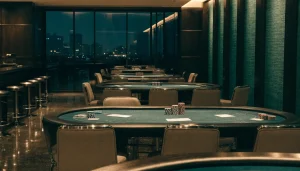
“Poker” can describe two different activities at a casino. Pokies, also known as Electronic Gaming Machines (EGMs), are games played on machines. Poker-room play involves people playing cards against one another, while a poker tournament is an organised format with its own entry and competition structure. One does not establish the availability of the others.
That distinction matters when assessing a Western Australian casino. A reference to pokies would not confirm that the venue has a poker room, runs tournaments or offers cash games. Equally, a poker-room listing would not establish which machine games are available. These are separate venue features, and each needs its own confirmation before it can be treated as part of a visit plan.
A poker room and a tournament also should not be treated as interchangeable. A room describes a playing area or service; a tournament describes a particular format. A venue might advertise one without providing the other, and the word “poker” alone does not settle whether play is scheduled, ongoing or available at all. The practical comparison is therefore between confirmed offerings, not between labels that happen to share a word.
Top Operators
Choosing a casino for Western Australia means checking the practical details that matter to you before signing up. This list highlights the available information for each operator to help you make an informed choice.
-
Ricky Casino
- Payout speed
- crypto under 1 hour, PayID 1-3 business days
- Min. deposit
- A$20 (A$30 to qualify for the bonus)
Ricky Casino lists crypto payouts in under an hour and PayID payouts in 1–3 business days. The minimum deposit is A$20, or A$30 to qualify for the bonus.
-
GoldenCrown
- License
- Curacao Gaming Control Board OGL/2023/176/0095 (Hollycorn N.V.)
GoldenCrown is listed under the Curacao Gaming Control Board licence OGL/2023/176/0095, held by Hollycorn N.V.
-
LevelUp Casino
- License
- Curacao eGaming OGL/2023/174/0082 (Dama N.V.)
- Min. deposit
- A$15
LevelUp Casino is listed under the Curacao eGaming licence OGL/2023/174/0082, held by Dama N.V. Its minimum deposit is A$15.
-
Lucky Dreams
- License
- Curacao
- Min. deposit
- A$20 (POLi)
Lucky Dreams is listed with a Curacao licence. Its minimum deposit is A$20 when using POLi.
-
House of Pokies
- License
- international iGaming licence – jurisdiction not named in the source
- Payout speed
- PayID 1-24 hours
- Min. deposit
- A$30 (PayID from A$10)
House of Pokies lists an international iGaming licence, though the source does not name its jurisdiction. PayID payouts are listed at 1–24 hours, and the minimum deposit is A$30, or A$10 when using PayID.
-
MrPacho
- Payout speed
- crypto 30-120 minutes, fiat 24-72 hours
- Min. deposit
- A$30
MrPacho lists crypto payouts in 30–120 minutes and fiat payouts in 24–72 hours. Its minimum deposit is A$30.
-
Uptown Pokies
- License
- Curacao (operating since 2017)
- Min. deposit
- A$20
Uptown Pokies is listed with a Curacao licence and has been operating since 2017. Its minimum deposit is A$20.
-
Rollero Casino
- License
- Curacao Gaming Control Board OGL/2023/176/0095 (Hollycorn N.V.)
Rollero Casino is listed under the Curacao Gaming Control Board licence OGL/2023/176/0095, held by Hollycorn N.V.
-
Kingmaker
- Payout speed
- crypto ~90 minutes, fiat 1-5 days
- Min. deposit
- A$30
Kingmaker lists crypto payouts at about 90 minutes and fiat payouts in 1–5 days. Its minimum deposit is A$30.
-
DragonSlots Casino
- License
- Curacao Gaming Authority (Jumpman Gaming Ltd)
DragonSlots Casino is listed with a Curacao Gaming Authority licence held by Jumpman Gaming Ltd.
The same caution applies to “rooms” in a casino search. In this context, the phrase could mean a poker room or hotel accommodation. Those are unrelated questions. A casino’s association with a hotel does not prove that card games take place in a dedicated room, just as a poker-room reference says nothing about overnight stays. Keeping the terms separate prevents a venue description from doing more work than it can support.
New South Wales provides a useful example of why state distinctions matter. There, the legal age for gambling on poker machines is 18, and mandatory pre-commitment systems require players to set a loss limit before play. Those are NSW conditions; they should not be transferred to Western Australia as if they were state-wide Australian rules.
NSW also offers a scale comparison, not a Western Australian ranking. Among clubs in that state, Club Liverpool operates more poker machines than any other club. That fact describes the NSW club sector. It says nothing about the number of machines at a Western Australian casino, and it does not make Club Liverpool a direct comparison with a casino venue in another state. The categories and locations are different.
For a Western Australian visit, the useful questions are specific: whether the venue offers EGMs, whether it has poker played at tables, whether tournaments are scheduled, and what conditions apply to each. A broad description of a casino cannot answer all four. Nor does a casino’s general status confirm a sports bar, its opening today, or the availability of poker at a particular time. Those details need to be checked as separate services rather than inferred from the venue label.

This is not a technical distinction for its own sake. It changes what a visitor can expect and what should be compared. Machine play, table poker and tournament participation are different products, with different formats and practical requirements. Treating them as one category can lead to a misleading comparison: a venue may appear to match a poker-related search while the specific activity intended remains unconfirmed.
A sound comparison therefore begins with the activity, not the word “casino.” For pokies, the relevant question is whether machine play is offered. For poker, the relevant question is whether card play or a tournament is actually available. State-specific rules should stay attached to their state, and venue features should stay attached to the exact service being described.
Hotel Rooms and On-Site Stays
A search for a casino hotel in Western Australia combines two separate decisions: choosing a place to stay and deciding whether its location suits a casino visit. The label alone does not establish that a casino and hotel share a building, that rooms are available on particular dates, or that a room booking includes any casino benefit. Those details need to be confirmed for the specific property and stay.
For a room to count as genuinely on-site, the hotel’s own description should make the relationship clear. A casino-themed name or a booking page that mentions a casino does not, by itself, show that guests can reach the venue from the hotel without travelling elsewhere. The distinction matters most when the stay is being planned around a late finish, an event, or a short visit: convenience depends on the actual location and access arrangements, not on the wording used in a listing.
Room availability is date-specific. A property may appear in broad searches for casino hotels without offering rooms for the intended dates, and a displayed room type does not establish that it is bookable for every stay. Before treating a room as part of a plan, the booking terms should identify the dates, occupancy, room category and final payable amount. If any of these are unclear, the quoted price is not yet a complete comparison.
What a hotel deal actually changes
A Western Australia casino hotel deal is useful only if its conditions reduce the cost or add something that would otherwise be purchased. The headline price is not the whole calculation. Compare the amount payable at checkout, the cancellation conditions, the payment timing, and any inclusions that are explicitly stated. A benefit that is not described in the booking terms should not be assigned a value.
The same test applies to packages. A room advertised alongside casino access or another extra does not establish that the extra is included, available throughout the stay, or suitable for every guest. The terms should specify what is provided and any conditions attached. If the package price is higher than a room-only rate, the difference is the cost of the stated extras. Whether that is worthwhile depends on their actual use, not on the package label.
Cancellation flexibility also has a price, even when it is not itemised separately. A refundable booking and a cheaper restricted booking are different products. The comparison should use the amount at risk if plans change, not just the initial rate. Where the cancellation deadline or refund conditions are unclear, the practical cost of the booking cannot be measured reliably.
 Fast Payout Online Casinos in Australia: What to KnowLearn what fast-payout claims cover, why processing speed does not guarantee receipt, and why no Australian online casino licences have been issued.
 Casinos in Victoria: Hotels, Dining and Stay DetailsLearn how to assess casino hotel offers, dining and practical stay details. Room bookings are separate from casino access, and total payable…
A room is not a venue timetable
A hotel booking does not confirm casino opening hours. Room access and venue operations are separate arrangements, so a stay should not be treated as evidence that the casino will be open at a particular time. Opening information belongs to the venue and can change independently of hotel availability. Any visit planned around specific hours needs confirmation through the relevant venue information before travel is arranged.
This separation also prevents a common planning error: assuming that an on-site room guarantees access to every facility or service associated with a venue. A booking confirms only what its terms say it includes. Descriptions should be read for the precise room, dates and inclusions, rather than extended to amenities or privileges that are not expressly named.
For a stay centred on a Western Australian casino, the sound comparison is therefore narrow: confirm whether the hotel is genuinely on-site, whether the room is available for the required dates, and what the final booking terms provide. The hotel name, promotional wording and proximity implied by a listing are not substitutes for those details. Where the relationship between hotel and casino is not stated clearly, it should not be assumed.
Accommodation Near the Casino
A stay near a casino is a separate booking decision from a room sold as part of the venue. For accommodation in Western Australia, proximity should be measured against the confirmed venue location and the actual route, not inferred from a property’s use of “near” in its listing. A short distance on a map does not establish how long a journey takes or what transport will cost.
Do
- Use the total price for intended dates including mandatory charges
- Check the actual route to the confirmed venue location
- Verify cancellation and amendment conditions
- Confirm payment timing and any deposit requirements
Don't
- Infer journey time from a property's use of "near" in a listing
- Rely on promotional headline rates
- Assume a venue reference in an advert guarantees transport
- Combine gaming offers with the lodging cost calculation
The useful comparison is the full stay cost. A room rate is only one line: booking conditions, fees shown before payment, transport to and from the venue, and the cost of meals or other necessities can change the total. Two listings with similar nightly prices may therefore produce different trip budgets. The amount payable at checkout is more informative than a promotional headline.
Accommodation deals also need to be assessed as terms rather than labels. A discount matters only if the dates, minimum stay, cancellation rules and payment conditions fit the trip. Where a rate is non-refundable, the lower price is exchanged for reduced flexibility. Where a promotion bundles extras, those inclusions have value only if they would otherwise have been purchased. An advertised saving is not the same as a lower final cost.
A practical comparison can be kept to a few items:
- the total price for the intended dates, including mandatory charges;
- the distance and route to the confirmed venue location;
- cancellation and amendment conditions;
- payment timing and any deposit or pre-authorisation;
- what is included in the rate, and what remains an extra.
The booking record should preserve the property name, address, dates, price and cancellation terms. That makes it possible to compare the confirmed reservation with the listing and resolve a discrepancy without relying on a remembered headline rate. If plans depend on reaching the casino at a particular time, the route should be checked independently; accommodation proximity does not establish the journey time.
“Casino accommodation” can also describe lodging marketed around a casino visit without being accommodation operated by the casino. The distinction matters for responsibility and booking terms. A venue reference in an advert does not establish that the venue manages the property, provides transport, or guarantees access to any particular facility. Those are separate claims and should be treated separately from the room rate.
Casino promotions should not be added to the accommodation calculation as though they reduce the lodging bill. A gaming offer and a room discount have different conditions, and a promotional label alone does not establish the amount saved or the total cost of qualifying. Any stay decision is clearer when lodging is compared on its own final price, with any gaming terms kept outside that calculation.
For a Western Australia casino visit, “near” is most useful when it has a defined reference point: the venue’s confirmed location, the route from the property, and the price payable for the whole stay. Without those pieces, proximity and savings remain marketing descriptions, not measurable advantages.
Getting There, Parking and Online Access
A visit to a casino in Western Australia involves two separate practical questions: how to reach the venue and whether its facilities suit the visit. Parking searches, including requests for valet parking, concern arrival arrangements. Online casino searches concern a different matter: Australian law and the technical controls used by gambling websites. The two should not be treated as interchangeable options for the same outing.
For a physical visit, parking should be confirmed through the venue’s own current information before travel. A listing or a reference to casino parking does not establish whether spaces are available, whether valet service operates, or what conditions apply. Those details can affect the trip’s cost and timing, so they need confirmation rather than inference. The same applies when the visit is planned around bingo or dining: those are venue activities, not evidence that online gambling is available to people in Australia.
Online access is subject to Australian restrictions
The Interactive Gambling Act 2001 makes it illegal for operators to provide real-money online casino games, including pokies and table games, to people physically located in Australia. An Australian-run online casino therefore cannot lawfully offer those services to local players. An offshore licence does not make an operator locally licensed or bring its service within Australia’s regulatory framework. Offshore platforms are not regulated under Australian law, and access to them may be restricted.
The practical restriction can be technical as well as legal. Online casinos may use a player’s IP address to estimate their geographic location, then block access to games or providers for people in excluded countries. A game may not appear in the lobby when the connection is identified as Australian. Regional restrictions can also prevent a game from loading. Availability can therefore depend on both the operator’s rules and the game provider’s own settings; a title visible elsewhere is not proof that it can be accessed from Australia.
 Darwin Casino: Entertainment, Stays and Visitor EssentialsExplore how Darwin’s casino fits the city’s entertainment scene, alongside practical coverage of stays, dining, events and visitor essentials.
 Hobart Casino Guide: Poker, Rooms and Visitor DetailsLearn how to distinguish poker facilities from scheduled tournaments, and what to verify in listings alongside rooms, parking, dining and venue details.
A specialist review has reported that a VPN can make a connection appear to come from another country, although the player remains physically in Australia. That technical change does not alter the legal position or create permission to use a service. Using a VPN to reach region-blocked pokies sites breaches the site’s terms and can lead to account suspension. A blocked game is not a reason to disguise location or treat a failed connection as a routine technical fault.
The distinction matters for anyone comparing a physical casino visit with an online alternative. A venue’s parking arrangements are a matter of travel planning; online access involves a prohibition on operators supplying real-money casino games to people in Australia. The fact that an offshore website may be reachable, or that its operator holds a licence elsewhere, does not make it an Australian-authorised casino. Those are separate questions, and treating technical access as regulatory approval would produce a misleading comparison.
For a visit, the useful decision is based on confirmed transport and parking arrangements. For online play, the relevant limit is that Australian residents cannot be offered real-money online casino games by operators, whether the games are pokies, bingo-style products, or table games. A website’s presence on the internet does not change that boundary.
Contact Details, Table Games and Venue Information
A search for a casino’s contact number, map or table-game list is a practical check, not evidence that a particular service is available. Contact details and venue layouts can change, so the useful information is the current material published by the venue itself. A third-party listing may retain an old number or map after details have changed; it should not be treated as the final authority for a visit.
The same distinction applies to baccarat and craps. A search for either game does not establish that it is offered at a Western Australian venue, or that a particular format or session is available. Those details need confirmation through the venue’s current information channels before they are used to plan a visit. If the published material does not identify a game, there is no sound basis for assuming it is part of the offering.
Table games: venue play and online play are different
Land-based table-game availability is a venue question. Online blackjack, roulette and pokies fall under a separate legal framework. The Interactive Gambling Act restricts operators based in Australia from providing online casino games to people in the country. An offshore platform is not regulated under Australian law, even though the legal position for Australian players using such platforms is different from the position of the operators providing them. That distinction is not a substitute for checking the law or the terms that apply to a particular service.
A game appearing in an online catalogue would not confirm that it is lawful for an Australian-based operator to provide it. Nor does a game name establish that an equivalent table game is available at a physical venue. The two settings should not be treated as interchangeable.
Contact, map and on-site details
For a reliable contact number, use the venue’s own current listing rather than a number copied across unrelated directories. The same applies to a map: it should identify the venue and its relevant entry points, not merely show a general area. If directions, access arrangements or a car park are part of the visit plan, confirm those details with the venue rather than inferring them from a map pin. A map can locate a building; it cannot confirm the terms of access.
 Melbourne Casino: Legal and Venue Details to CheckSeparate in-person venue questions from online gambling rules, and see which details—rooms, parking, dining and facilities—still need verification.
 Sydney Casino Hotel: Rooms, Rates and Venue GuideCompare on-site and nearby accommodation, check rate conditions, and explore dining, facilities, table games and NSW gambling rules at Sydney’s casino.
Bar information should also be checked separately. A venue search may return references to a bar, but that does not confirm its location, operating times or whether access is tied to an event or other conditions. Concert listings are similarly time-sensitive and belong to the venue’s current events information, not to a general description of its facilities.
A compact pre-visit check is therefore more useful than relying on an undated directory entry: confirm the venue’s official contact channel, consult its current map, and verify the specific facility or game being considered. Where those details are not stated, treating them as confirmed would turn a search result into an assumption.
Breakfast, Rewards and the Cost of Bonus Terms
Breakfast and buffet searches concern what a venue serves and when; they do not establish that a meal is included with a room, stay or other purchase. A resort label is not a meal plan. Before treating breakfast as part of a visit, the relevant details are whether it is served, whether access is included or separately priced, and whether the service is available on the intended date. Buffet availability and breakfast service are separate questions, not interchangeable descriptions.
Rewards require the same separation of categories. A venue loyalty programme, if offered, is not the same product as an online gambling promotion. The word “reward” gives no usable value by itself: eligibility, qualifying activity, expiry conditions and any restrictions determine what can actually be received or redeemed. A displayed benefit without those terms is packaging, not a calculated return.
Bonus Value Calculation
-
1
Identify the baseline
Determine the qualifying winnings and the applicable multiplier (e.g., 20x to 50x).
-
2
Check contributions
Verify if the game (such as pokies) contributes 100% toward the wagering requirements.
-
3
Apply limits
Review maximum cashout limits and expiry conditions to determine the final withdrawable amount.
Free-spin offers are especially dependent on conditions attached to winnings. A report by psu.com describes free-spin winnings as carrying wagering requirements in the range of 20x to 50x before withdrawal. That is a reported range, not a universal rule or a promise that a particular offer uses those terms. A specialist review has separately reported a 30x wagering condition on free-spin winnings. These figures should not be combined into a single standard: the applicable requirement is the one stated in the offer’s terms.
The multiplier changes the amount of play required before withdrawal. If the condition applies to winnings, the qualifying amount is multiplied by the stated requirement; the free spins themselves do not remove that condition. When pokies contribute 100% toward wagering requirements, each eligible wager counts in full toward the threshold. That still does not make the threshold cash, nor does it mean every game or stake qualifies. The terms decide which play counts and what happens if the requirement is not completed.

Other clauses can change the final value further. Wagering conditions may sit alongside maximum cashout limits or terms allowing winnings to be voided. A headline bonus therefore cannot be assessed by its stated size alone. The relevant calculation is the qualifying winnings, the applicable multiplier, which games count, any expiry condition, and the amount that can ultimately be withdrawn. If any part is unclear, the advertised benefit cannot be treated as a dependable amount.
Employment searches are a separate task from breakfast, accommodation and customer rewards. A casino job listing should be assessed as an employment offer, with the role, pay basis, hours, location and conditions taken from the vacancy itself. A venue’s guest rewards do not describe staff benefits, and neither a resort label nor a promotional campaign establishes that positions are available. Keeping those categories separate prevents a search for work from being mistaken for a search for a guest offer—or vice versa.
 Queensland Casinos: Hotels, Rates and Verified DetailsLearn how casino-attached hotels differ from nearby stays, and why rates must match dates, occupancy and room type to be compared fairly.
 Best pokies in Geelong: venue status and searchesLearn how to check whether a Geelong venue and its gaming floor are open, and why directory listings, “best-paying” claims and 24-hour…
Opening Hours, Events and the Australian Gambling Framework
Opening hours and event listings are practical details, but they should be treated as time-sensitive rather than assumed from an old review or a general venue description. Before making plans, confirm the operating status and current schedule through the venue’s own announcements. A past listing does not establish that an event is still scheduled, and development news does not by itself confirm that a casino has opened or reopened.
That distinction matters when considering proposed development, construction activity and an operating venue. A project announcement may describe future plans; it is not the same as confirmation that guests can enter. Employment notices are another separate category: recruitment activity may concern a project or business operation, but it does not set public opening hours or establish an event calendar. Each item answers a different planning question.
Entertainment listings also need to be checked for date, location and status. A venue’s general entertainment offering is not proof that a particular performance or event is taking place on a chosen day. The useful details are the event’s confirmed schedule and any current notice of changes. Without those, a review can establish little beyond what was reported at the time it was written.
The legal distinction between land-based venue planning and online gambling is important. Under the Interactive Gambling Act, operators based in Australia cannot provide online casino games such as pokies, blackjack or roulette to people in Australia. Sports betting, by contrast, remains widely accessible and legal in the country. These are different services under the framework; the availability of sports betting does not make online casino games lawful for Australian-based operators.
That difference can also prevent a misleading interpretation of entertainment or event information. A casino’s on-site schedule and the legal status of online casino games are not interchangeable subjects. A venue announcement cannot establish that an online casino service is permitted, and a legal restriction on online games says nothing about whether a physical venue is open.
For a review, the useful measure is whether its information is specific enough to support a visit: a current operating notice, a dated event entry, or a clear statement that a reopening has been confirmed. If those details are absent, the review should not be treated as proof of current access. Conditions change; a dated notice is more useful than confident wording without a date.
Restaurants and Dining Information
Dining is a separate part of planning a casino visit. Restaurant searches can point to very different expectations: a full meal before an evening out, a place to meet companions, or somewhere to sit after spending time at the venue. The useful comparison is practical rather than promotional: what kind of meal is wanted, when it needs to fit into the visit, and whether the venue’s current arrangements suit that plan.
A restaurant’s name alone would not settle those questions. Menus, service times, booking conditions and prices determine whether an option works for a particular visit, and those details can change. A meal planned around a particular dish or budget therefore depends on current venue information, not on a general description of casino dining.
 Adelaide Casino: Hotels, Dining and Visitor DetailsCompare casino-linked stays with nearby independent hotels, and see which booking details affect the total cost, including dates, room type and cancellation…
 Brisbane Casino Hotel Guide: Rooms and Visit DetailsCompare accommodation by total room cost, cancellation terms and stated inclusions; a room reservation alone does not establish casino access.
The phrase “casino restaurants in Western Australia” can also blur two separate locations: dining inside a casino and restaurants elsewhere in the surrounding area. Those are not interchangeable choices. A venue inside the casino may suit a plan to remain on site; a nearby restaurant involves a separate destination and its own arrangements. Location, opening times and booking requirements matter more than the shared casino label.
Rooftop bars create a similar distinction. The label suggests a setting, but it does not establish that a bar is attached to a casino, open at the intended time, or serving food. A rooftop venue may operate independently of the casino, so its location and relationship to the main venue should be checked before it becomes part of an itinerary. Views are not a meal plan.
A disciplined dining budget keeps the food decision separate from gambling expenditure. Set the amount allocated to the meal before the visit and treat it as a planned cost, rather than allowing it to expand alongside casino spending. Gambling cannot be relied on to cover restaurant bills, groceries or rent; that expectation has no sound financial basis. Increasing stakes to recover losses only adds exposure, not certainty.
For anyone comparing a Western Australian casino restaurant with nearby dining, the relevant details are the actual venue, its current menu, service hours, booking terms and final price. A headline description cannot substitute for those conditions. The same applies to a rooftop bar: its name, location and food service need to match the intended plan.
The sensible decision is therefore specific: identify the dining venue, confirm the conditions that affect the visit, and set a meal budget independently. Casino dining is not one standard product, and broad labels do not establish what is served or what it costs.
Spa, Address and Dress-Code Searches
A spa, address or dress-code listing can look like a minor detail until it determines whether a visit is practical. None should be treated as confirmed merely because it appears in a search result. For a Western Australian casino visit, the useful distinction is between information tied to the venue’s own current channels and details repeated on third-party pages, which may be out of date or refer to a different business.
Spa facilities and venue details
A day spa search raises a specific question: whether spa services are available at the casino itself, rather than at a separate nearby business. The wording of a listing matters. “Near the casino” does not mean “inside the casino”, and a general hotel or precinct description does not establish that spa facilities are part of the venue. Before making plans around a treatment, confirm the facility’s location, operating arrangements and booking requirements directly with the business responsible for it.
The same care applies to an address. A result labelled as the casino’s address may point to an entrance, a broader property or an outdated listing. Confirm the venue’s current official address and the intended arrival point before setting out. This is a practical check, not a reason to infer that any particular entrance or facility exists.
Dress, bars and games
Dress-code information can be narrow: a rule may apply to a particular area or event rather than the entire property. A general description such as “smart casual” is not a reliable substitute for the venue’s own current entry conditions. Where plans include a bar or gaming area, verify whether separate requirements apply there. The existence of a bar, a spa or a particular gaming option should not be inferred from the search wording alone.

Careers information
Employment listings also need to be distinguished from visitor information. A casino careers page concerns recruitment, not access to the venue’s facilities. Check that a vacancy is published by the relevant employer and that its location and role are clearly identified before relying on it. Third-party listings can be useful pointers, but they do not establish that a position remains open or that the employer has confirmed the details.
The sensible planning sequence is therefore administrative: establish which business is being described, confirm its current address and the relevant facility or entry conditions, then make arrangements. That avoids turning an unverified spa listing, dress-code summary or job advert into a fixed assumption about the venue.
Food, Pool and What the Available Facts Cannot Confirm
Food-court facilities and a swimming pool are separate practical considerations when planning a casino visit. Neither should be assumed to be part of a Western Australian casino simply because it appears in venue-related searches. A food court would mean a shared area with multiple food outlets; a pool would be a leisure facility, not a dining amenity. Those labels describe different services and require separate confirmation.
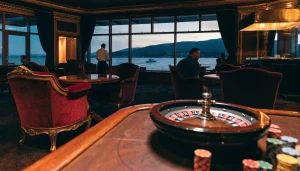
For food, the relevant details are whether a venue has a dedicated food-court area, what outlets operate there and when they serve. General references to food at a casino do not establish any of those points. They also do not confirm that meals are sold in a shared court rather than through individual dining venues. Restaurant information belongs to a separate assessment and cannot be used as proof of a food court.
A pool requires its own check. A hotel association, resort-style description or nearby accommodation does not establish that casino visitors can use a pool on site. Access conditions, opening periods and whether the facility is available to non-hotel guests should not be inferred from the venue’s name or location.
The same distinction matters when comparing options: an amenity counts only when its existence and access terms are clear. Until then, food-court and pool references are not a sound basis for choosing a venue or estimating the value of a visit.